

In this article
Short answer
Chronic insomnia, postpartum fatigue and skin changes, and decreased ovarian function often have identifiable causes (such as sleep apnea, anemia, thyroid problems, or hormonal changes) and established care pathways. See the relevant specialty and complete basic tests first, then discuss other options; making cell or IV drip programs your first choice risks missing the real cause.
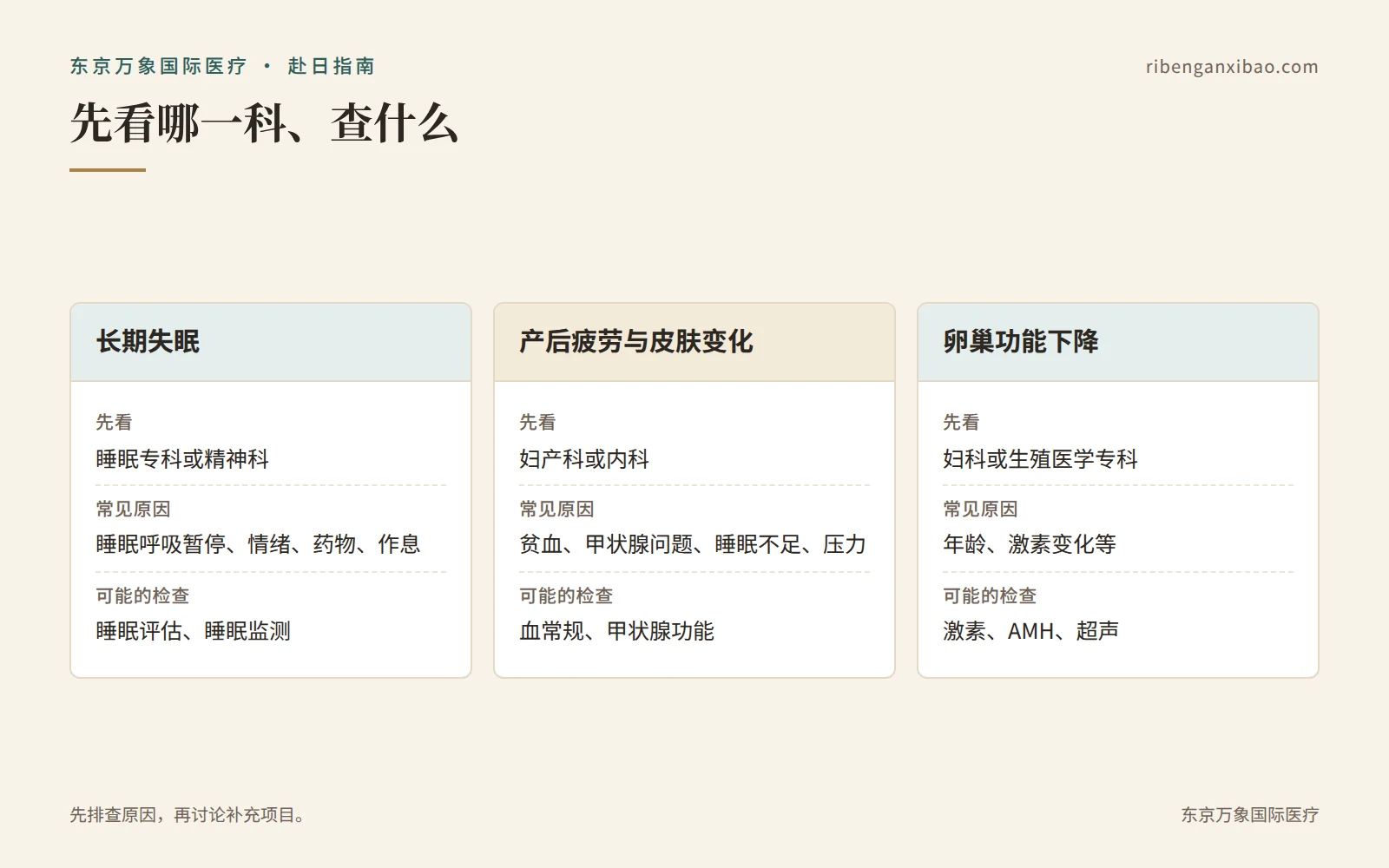
- Chronic insomnia
- See a sleep clinic or psychiatry first; common causes include sleep apnea, mood, medications, and sleep schedule
- Postpartum fatigue and skin changes
- See obstetrics and gynecology or internal medicine first; common causes include anemia, thyroid issues, sleep deprivation, and emotional stress
- Decreased ovarian function
- See gynecology or reproductive medicine first; assess with hormone tests, AMH, and ultrasound
- Common principles
- Rule out causes first, then discuss add-on options
01
Why start with standard care
These three situations are common and may relate to treatable conditions. If you jump straight to cell or drip programs, you may miss the real cause and it will be hard to tell what later changes are due to.
02
Chronic insomnia
Persistent insomnia may be related to mood, sleep apnea, medications, sleep schedule, or other illnesses. The standard pathway is to start with a sleep assessment, do sleep monitoring if needed, then choose cognitive behavioral therapy, medication, or cause-targeted management based on the findings.
Claims like “nerve repair” or “cells to regulate sleep” currently have no basis in standard care and should not replace conventional treatment.
03
Postpartum fatigue and skin changes
Postpartum fatigue and changes in skin and hair may relate to anemia, thyroid function, sleep deprivation, mood, and caregiving stress. Do blood tests and a basic evaluation first to rule these out, then discuss aesthetic or other options.
04
Decreased ovarian function
Menstrual changes and ovarian reserve indicators should be assessed by gynecology or reproductive medicine, judged in light of age, reproductive plans, and test results.
For programs like “ovarian stem cell maintenance,” focus on verifying evidence and risk: is it an approved treatment, clinical research, or self-pay? Is there a regenerative medicine provision plan? Research programs should be within a research framework with full informed consent.
05
How this can be arranged in Japan
Foreign patients can self-pay to book health checkups and specialty clinics in Japan. Prepare prior test results and medication history in advance; a coordinator can assist with booking, interpreting, and report explanation. This is more valuable than picking a “package” directly.
06
Common questions
Can insomnia be treated with stem cells?
There is currently no standard basis supporting stem cells for insomnia. Do a sleep assessment first to find the cause, then choose the corresponding treatment.
Are “ovarian maintenance” programs reliable?
First ask whether it is an approved treatment, clinical research, or self-pay, and whether there is a regenerative medicine provision plan; then have a reproductive medicine specialist assess whether it suits you.
Can I see these specialties in Japan?
Yes. Foreign patients can self-pay to book checkups and specialty clinics; you need to prepare materials in advance and arrange interpreting.