

In this article
Short answer
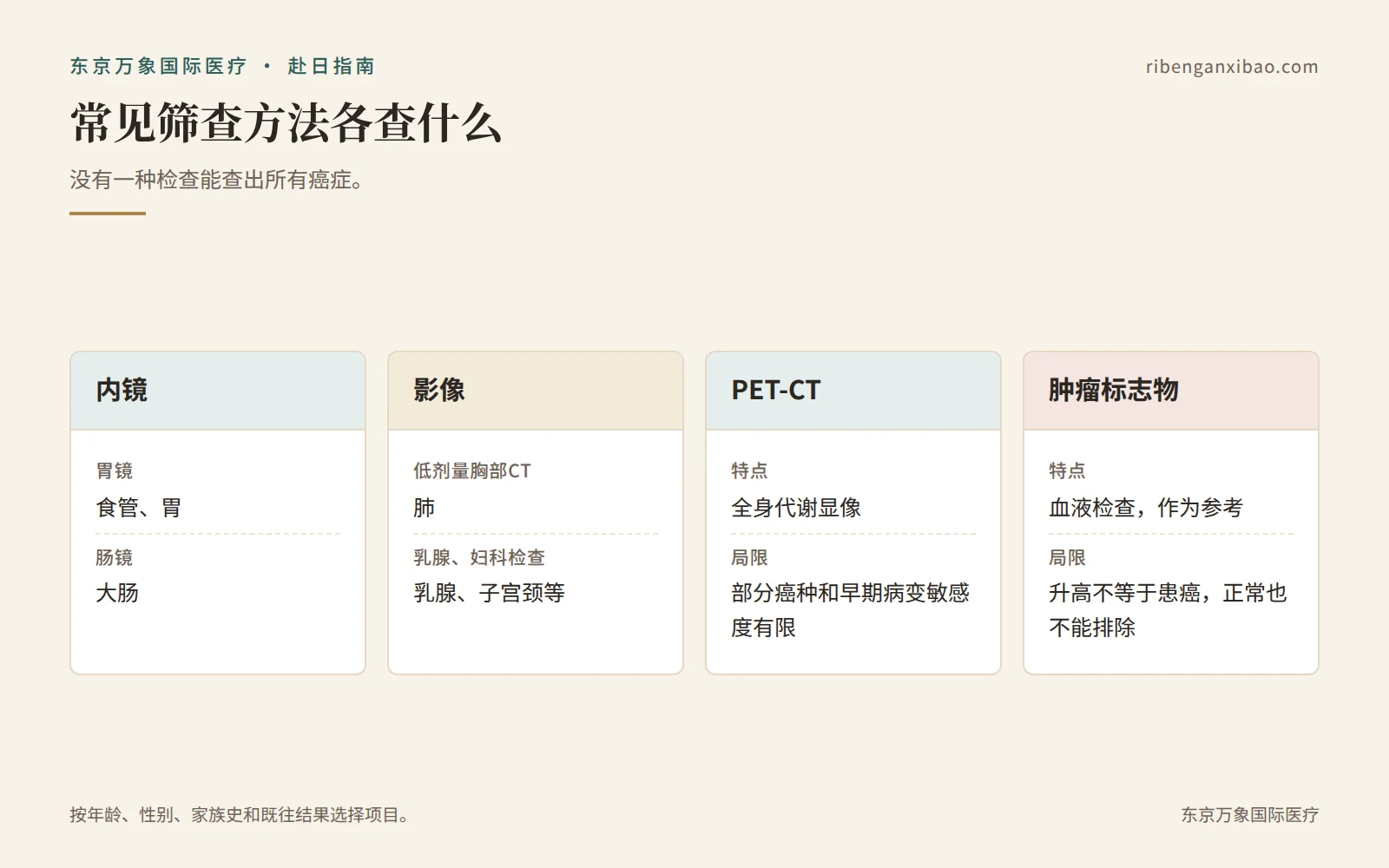
Cancer screening targets specific cancers and uses imaging, endoscopy, blood tests, and other methods to screen. The goal is early detection, not treatment, and it cannot guarantee you can “get checked once and be reassured.” Choose tests based on age, sex, family history, and prior results; tests like PET-CT also have cancers they are not good at detecting. If results are abnormal, further detailed tests are needed.
- Common items
- Gastroscopy, colonoscopy, low-dose chest CT, breast and gynecological exams, tumor markers, PET-CT, etc.
- Limitations
- Each method has body areas it is best at; none can detect all cancers
- Tumor markers
- Elevation does not equal having cancer; normal does not rule it out
- Schedule
- Checkups usually take 1–2 days; allow extra time if more detailed tests are needed
- How it differs from treatment
- Screening is not treatment, and should not be confused with immune cell therapy and similar programs
01
What cancer screening can do
For common cancers such as stomach, colorectal, lung, breast, and cervical cancer, screening uses appropriate tests to detect abnormalities early, gaining time for further testing and treatment.
02
What it cannot do
- It cannot guarantee detection of all cancers; every test can miss some
- PET-CT has limited sensitivity for some cancers (such as early stomach cancer)
- Tumor markers are for reference only and cannot be used alone to diagnose
- Screening is not treatment and cannot replace specialist evaluation when symptoms appear
03
How to choose tests
Choose based on age, sex, family history, smoking and drinking habits, and prior results; this is more targeted than the “most comprehensive package.” For example, those with a family history of stomach cancer should prioritize gastroscopy; long-term smokers should consider low-dose CT. You can ask the checkup facility’s doctor to advise based on the intake interview.
04
How to arrange a checkup in Japan
Submit your medical questionnaire and prior reports in advance, and confirm pre-test diet and medication requirements (e.g., fasting or bowel prep for gastroscopy/colonoscopy). Reports usually take some time; confirm whether there will be a same-day verbal explanation or mailing later, and how Chinese-language explanation and follow-up after returning home will be arranged.
05
What if results are abnormal
If a checkup finds an abnormality, the next step is more detailed tests (e.g., biopsy, contrast-enhanced imaging) assessed by a specialist. You can continue testing in Japan or take the report home; the key is not to delay.
06
Common questions
Can PET-CT detect all cancers?
No. PET-CT has limited sensitivity for some cancers and early lesions, and usually needs to be combined with other tests such as gastroscopy and colonoscopy.
If tumor markers are high, does that mean cancer?
Not necessarily. Inflammation, smoking, and some benign diseases can also raise levels; a doctor needs to judge in combination with imaging and other tests.
How often should I do cancer screening?
It depends on age, risk, and your last results. In general, follow your doctor’s advice for regular follow-up; people with a family history or high-risk factors may need shorter intervals.
If a problem is found in the checkup, can I continue care in Japan?
You can arrange more detailed tests or a specialist visit in Japan, but confirm the hospital’s intake conditions and your length of stay; you can also take the report home and continue care there.