

In this article
Short answer
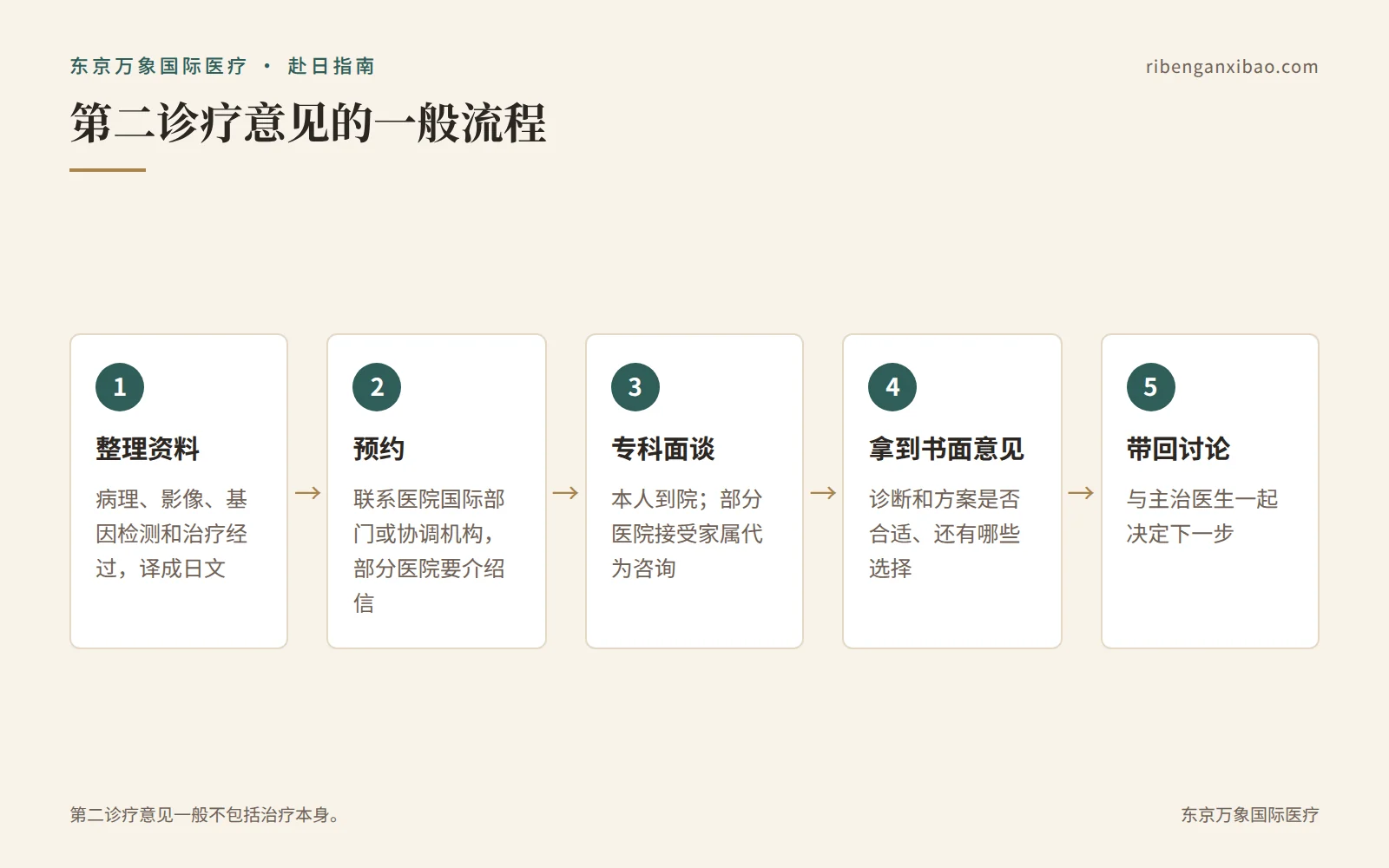
In a cross-border cancer consultation, the most valuable part is the “second opinion”: give the pathology report, imaging, genetic testing, and treatment course to a Japanese specialist and ask them to evaluate whether the current diagnosis and plan are appropriate and what other options exist. Standard treatment is the foundation; self-pay options such as immune cell therapy cannot replace it and should only be discussed as supplements after a doctor’s assessment.
- Second opinion
- A specialist evaluates the diagnosis and treatment plan based on your records; it generally does not include treatment itself
- What to prepare
- Pathology report (pathology slides if needed), original imaging data, genetic testing, treatment course; some hospitals require a referral letter from the attending physician
- Format
- Mostly in-person at the hospital; some hospitals accept family members bringing records to consult on the patient’s behalf
- Translation
- Records usually need to be translated into Japanese; a medical interpreter is needed for the consultation
- Fees
- Self-pay according to each hospital’s rules
01
What a second opinion can resolve
It answers: Is the current diagnosis accurate? Does the treatment plan meet standards? Are there other options worth considering? For complex cases, where plans diverge, or when confirming next steps, this opinion is valuable.
A second opinion generally does not include treatment. If you later wish to receive treatment in Japan, you need to separately confirm the hospital’s acceptance conditions and visa arrangements.
02
What to prepare
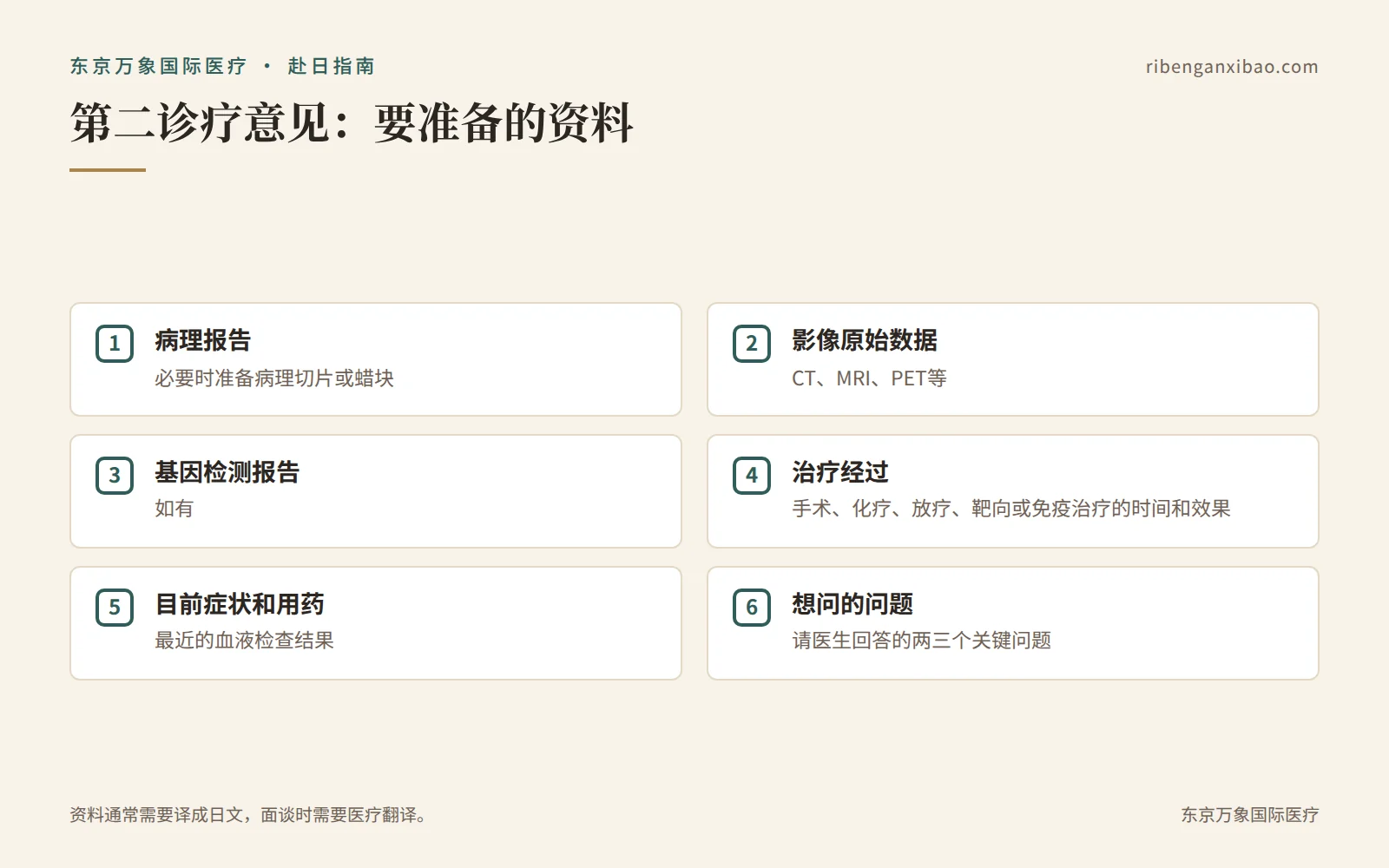
- Pathology report; prepare pathology slides or paraffin blocks if needed
- Original imaging data such as CT, MRI, PET
- Genetic testing report
- Treatment course: timing and effects of surgery, chemotherapy, radiotherapy, targeted therapy, or immunotherapy
- Current symptoms and medications
- The two or three questions you most want the doctor to answer
03
Where supplementary options fit
“Immunotherapy” includes many completely different techniques. Immune checkpoint inhibitors are among the approved standard treatments; autologous immune cell therapies such as NK cells and alpha-beta T cells are self-pay in Japan, with limited evidence.
Confirm the standard treatment pathway first, then discuss supplementary options; when discussing, keep the attending physician informed and confirm timing and interactions.
04
Don’t be led by country stereotypes
“Cancer treatment is more advanced in Japan,” “treatments abroad that aren’t available at home”—impressions like these cannot replace specific medical judgment. The core of cancer treatment is pathology, staging, and evidence-based protocols, which are the same across countries.
05
Common questions
Does the patient have to go to Japan in person?
Not necessarily. Some hospitals accept family members, with the patient’s consent, bringing records to consult on their behalf; whether remote consultation is possible depends on each hospital’s rules.
What if the Japanese doctor’s opinion differs from that of my doctors back home?
Take the second opinion back and discuss the reasons for the differences with your attending physician, then decide the next step.
Can I proceed directly to treatment in Japan after the consultation?
It depends on whether the hospital will accept you, whether your condition is suitable for cross-border treatment, and on visa and stay arrangements; these need to be confirmed separately.