

In this article
Short answer
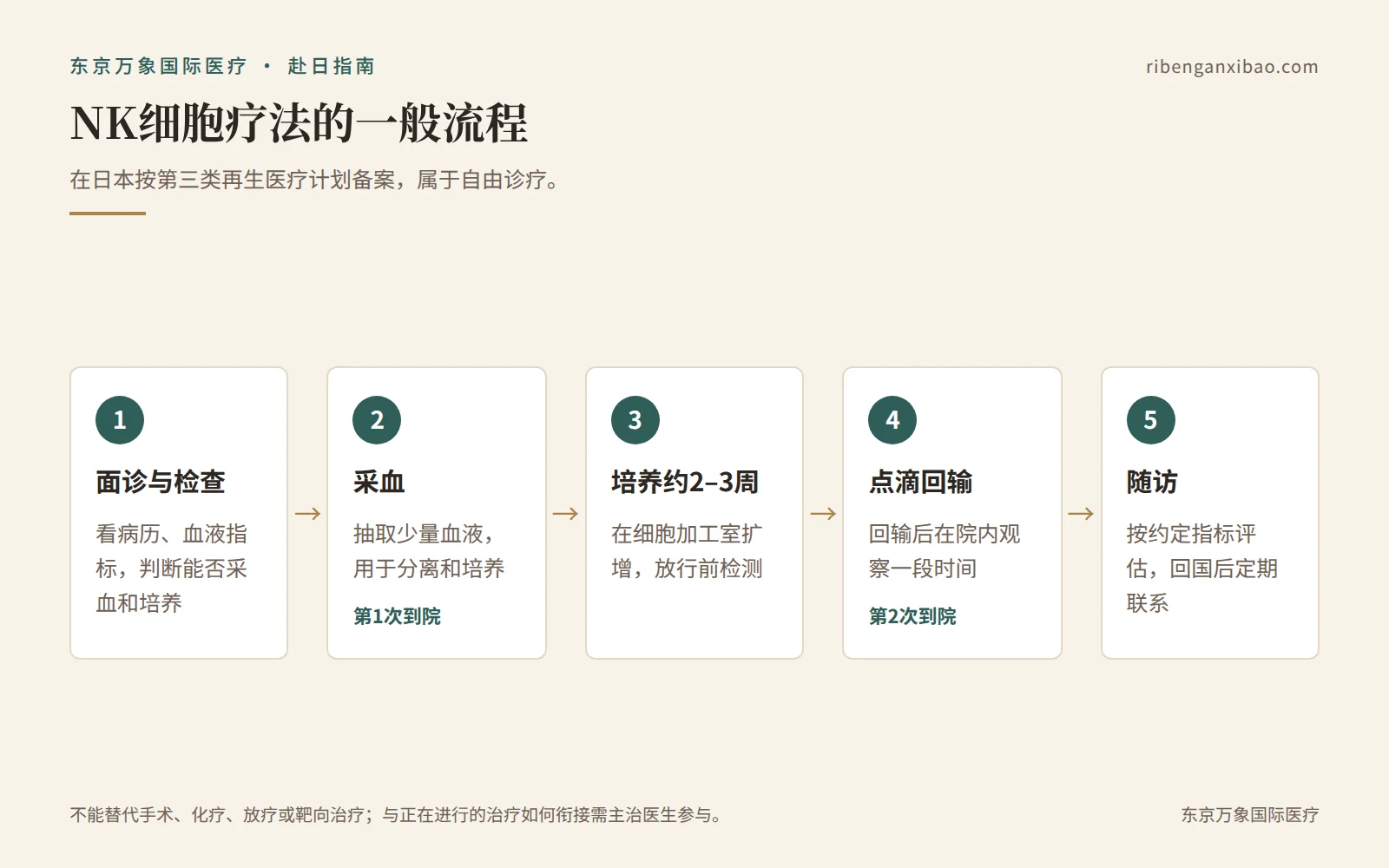
NK cell therapy separates immune cells from your own blood, cultures them for about 2–3 weeks, then reinfuses them by IV drip. In Japan it is registered as a Class III regenerative medicine provision plan and is a self-pay treatment. It is not a standard cancer treatment and cannot replace surgery, chemotherapy, radiotherapy, or targeted therapy. Whether it is suitable, and whether it can be done alongside ongoing treatment, must be determined by a doctor after reviewing the medical records.
- Cell source
- Your own blood
- Regulation in Japan
- Class III regenerative medicine provision plan; can be checked against the Ministry of Health, Labour and Welfare (MHLW) list
- Culture time
- About 2–3 weeks (per the institution’s information)
- Administration route
- IV drip reinfusion
- Trip to Japan
- Blood draw and reinfusion are separate; usually two clinic visits
- Relationship with standard treatment
- Cannot replace; whether to do it concurrently requires joint judgment by the attending physician and the Japanese doctor
- Cost
- A written quote will be provided by the institution after consultation
01
What are NK cells
NK cells (natural killer cells) are part of innate immunity and can recognize and attack some abnormal cells. This is an immunology concept with a solid research base.
But “NK cells have roles in the body” and “expanding NK cells ex vivo and reinfusing them can bring clinical benefit” are two different things. The latter needs to be evaluated for specific diseases and specific protocols, and current evidence remains limited.
02
“Immunotherapy” does not always mean the same thing
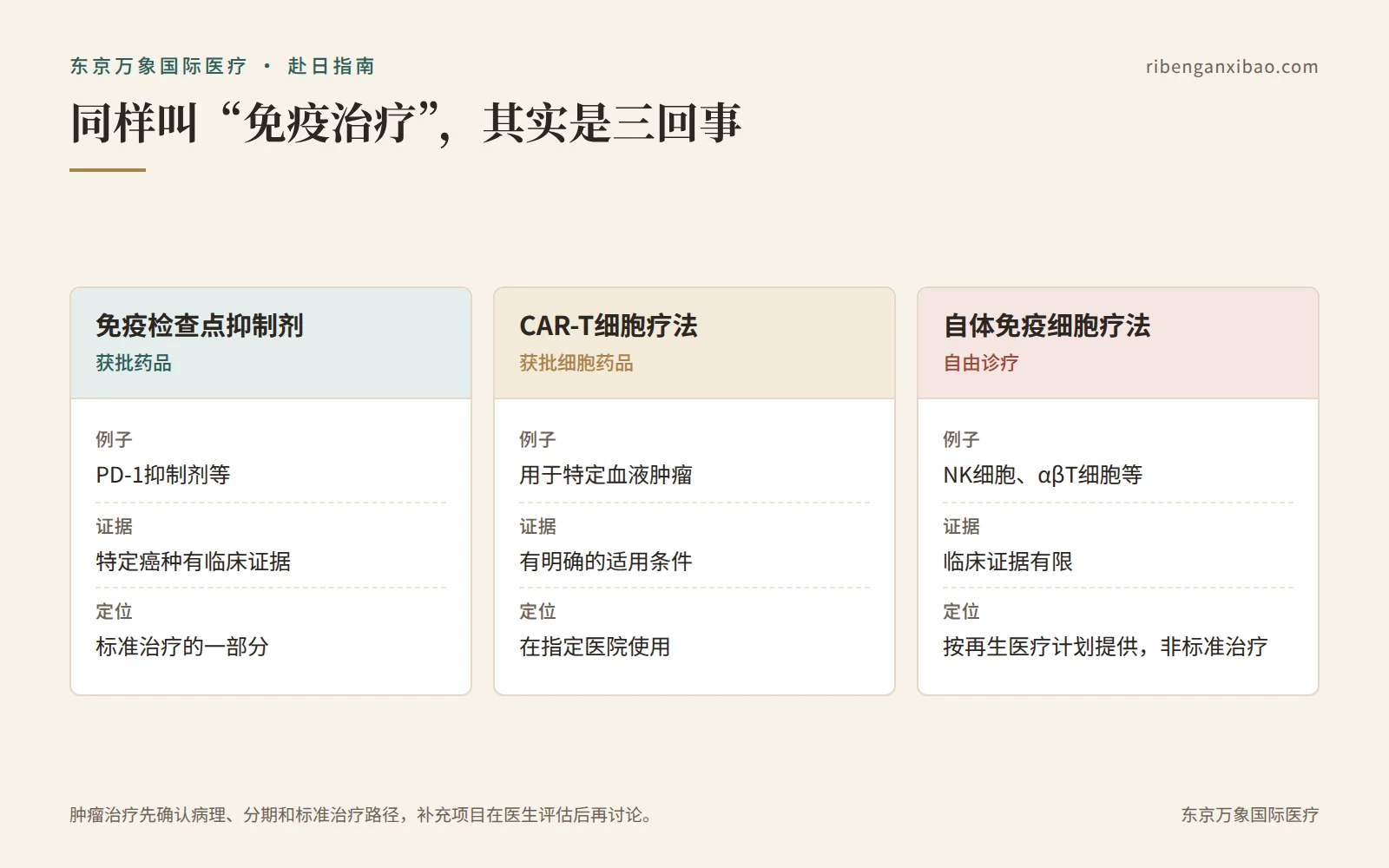
The “immunotherapy” in the news may refer to completely different technologies; distinguish them first when you inquire:
- Immune checkpoint inhibitors (such as PD-1 inhibitors): approved drugs with clinical evidence in specific cancers, part of standard treatment.
- CAR-T cell therapy: approved cell-based drugs for specific hematologic cancers, with strict indications.
- Autologous immune cell therapies (such as NK cells and alpha-beta T cells): provided in Japan as self-pay under regenerative medicine plans; clinical evidence is limited and they are not standard treatment.
03
Cancer patients should first confirm the standard treatment pathway
Cancer treatment depends first on pathology type, stage, and genomic testing results; standard treatments (surgery, chemotherapy, radiotherapy, targeted therapy, immune checkpoint inhibitors, etc.) are the foundation. If you are receiving treatment, any supplementary items should be discussed with the attending physician first.
During or just after chemotherapy, your condition and blood counts will affect whether blood can be drawn, culture performance, and the timing of reinfusion. Bring your recent complete blood count (CBC), treatment plan, and schedule to the Japanese doctor so they can assess the timing.
04
What family members can do when bringing parents to a consultation
Family members add value by supplementing the medical history, recording the doctor’s explanations, and assisting with follow-up after returning home, not by making decisions for their parents or chasing “the latest and most expensive technology.”
At the consultation, have your parents attend in person if possible, and ask the interpreter to relay the doctor’s explanations sentence by sentence. Ask permission before photographing or recording important information. Allow time before deciding so the patient and family can consider it together.
05
Questions to ask at the consultation
- Are my condition and blood counts suitable for blood draw and cell culture?
- How long is the culture, what is tested before release, and can results be provided in writing?
- How many reinfusions, at what intervals, and how many days do I need to stay in Japan each time?
- What adverse reactions may occur (such as transient fever), and how are they managed?
- How does this align with my ongoing treatment? What coordination is needed from my attending physician?
- What indicators will be used to assess it, and how will follow-up be done after I return?

06
Common questions
Can NK cell therapy cure cancer?
Do not interpret it that way. In Japan it is a self-pay service, not a standard cancer treatment; clinical evidence is limited, and it cannot replace surgery, chemotherapy, radiotherapy, or targeted therapy.
I am undergoing chemotherapy. Can I do it at the same time?
The timing needs joint judgment by the attending physician and the Japanese doctor. Blood counts and condition during chemotherapy affect blood draw, culture, and reinfusion.
I do not have cancer; can I do it just to boost immunity?
Some institutions offer programs for health management purposes, but “boosting immunity” is hard to measure with clear metrics. Clarify your goals first, then ask the doctor to explain the expectations and how to assess them.
How many trips to Japan are needed?
Generally two: the first for blood draw, and about 2–3 weeks later the second for reinfusion. Plans with multiple reinfusions require multiple visits.