

In this article
Short answer
First organize your medical records, imaging, and medications, then go in with five questions: Am I suitable? Where do the cells come from and how are they processed? Under which class is this project registered in Japan? What are the risks and alternatives? Who follows up after treatment? It’s normal medical judgment if the institution declines after reviewing your materials.
- What to bring
- Recent medical records and diagnoses, test reports, original imaging data (disc or electronic files), current medications, allergy history, past surgeries
- Think through first
- The single problem you most want to solve, and how many trips to Japan and days of stay you can accept
- Translation
- We recommend translating key records into Japanese or English in advance, and having a medical interpreter present at the consultation.
- Number of trips
- Stem cells require collecting tissue first and culturing for about 3–4 weeks, so you usually need two trips; PRP and similar can be prepared the same day.
- Costs
- After the consultation the institution issues a written quote; medical fees and the coordination fee should be listed separately.
01
What to prepare before the consultation
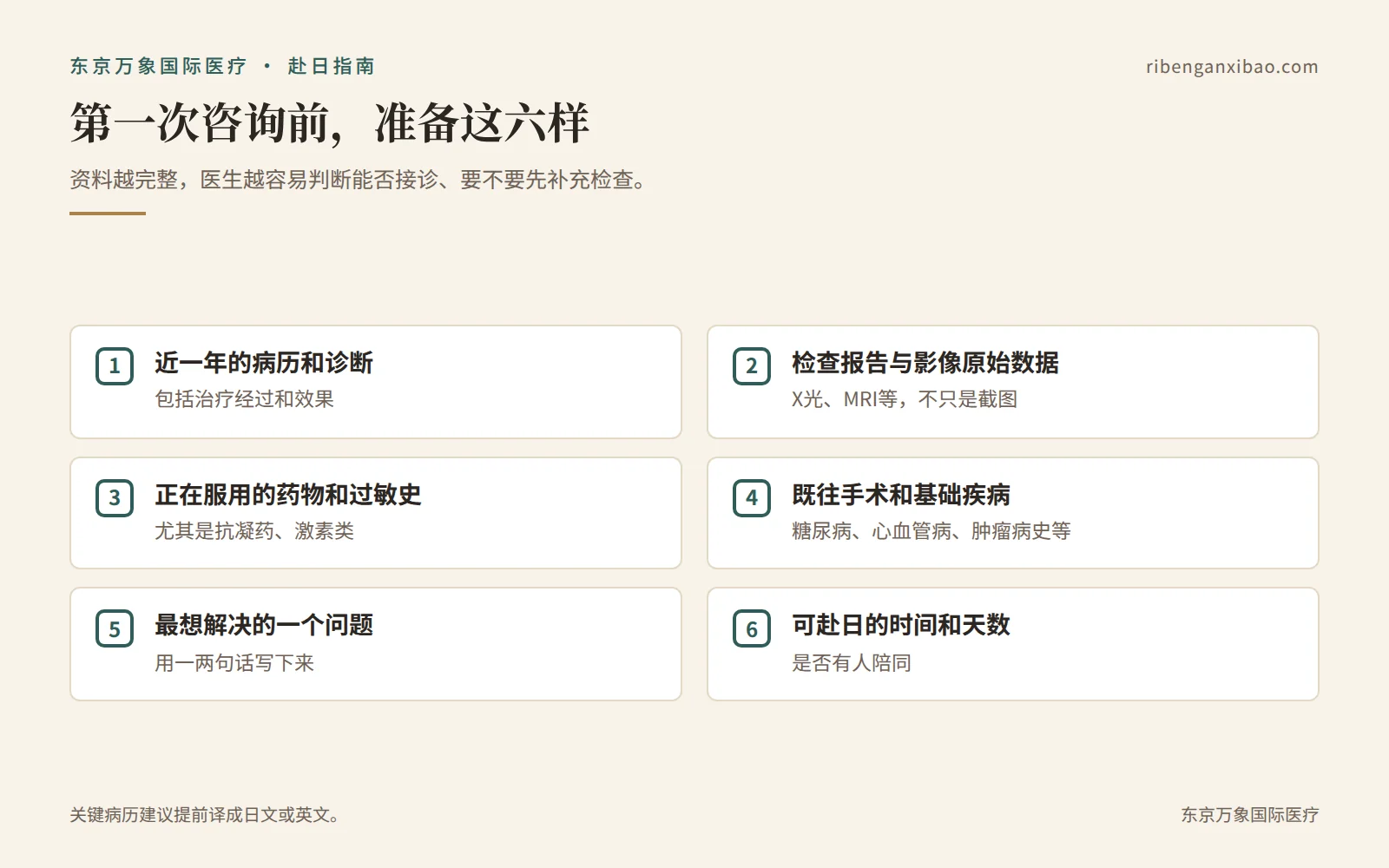
The more complete the materials, the easier it is for the doctor to judge whether to accept and whether additional tests are needed. We recommend preparing:
- Medical records, diagnoses, and treatment course within the past year
- Test reports and imaging (for X-ray, MRI, etc., provide original data if possible, not just screenshots of reports)
- Current medications (especially anticoagulants and steroids) and allergy history
- Past surgeries and major underlying diseases (diabetes, cardiovascular disease, cancer history, etc.)
- The one problem you most want to solve, written in one or two sentences
- When you can travel to Japan, how many days you can stay, and whether someone will accompany you
02
Five questions to ask at the consultation
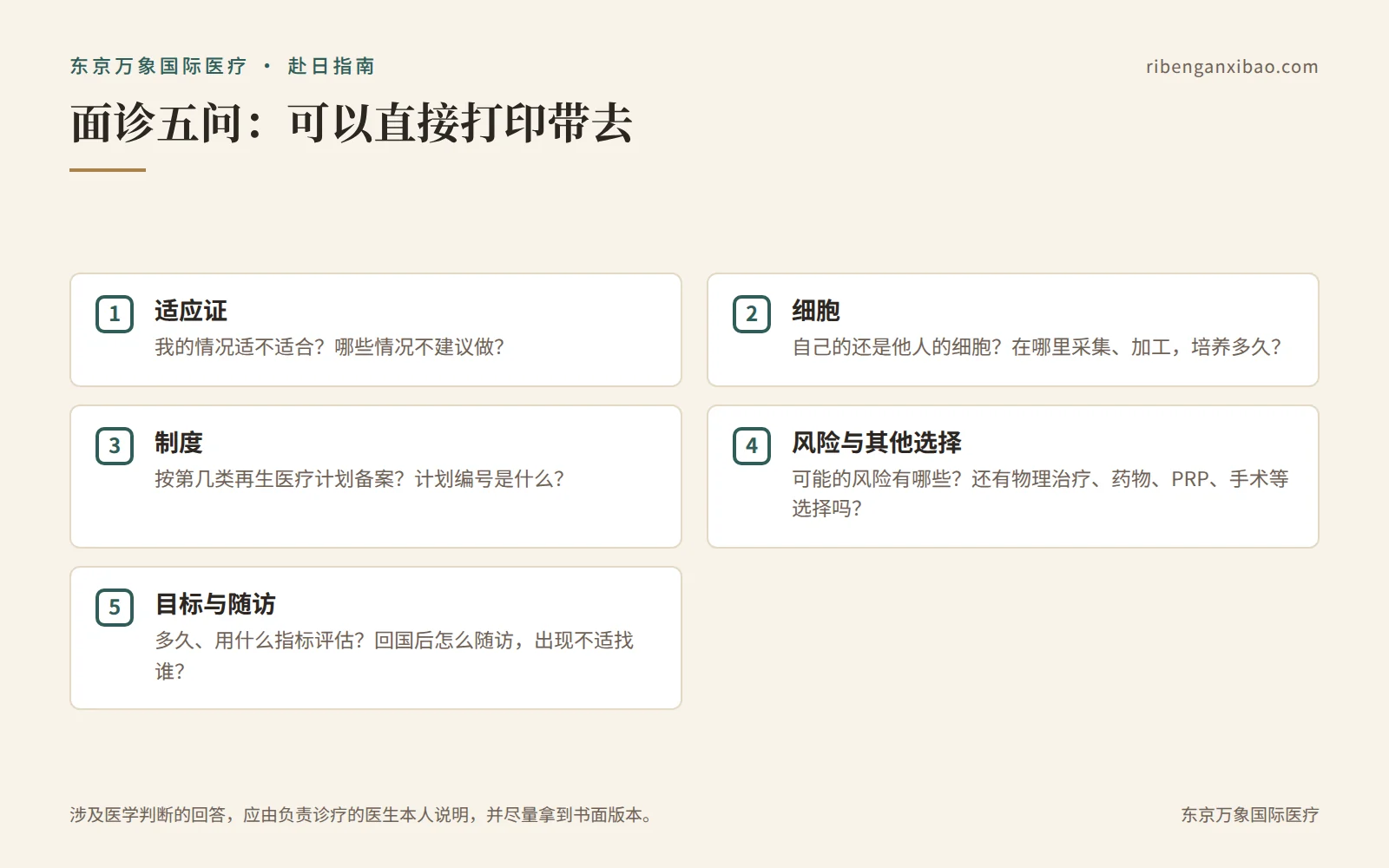
These five cover the key information you need to decide; you can print and bring them:
- Indications: Am I suitable? In which situations is it not recommended?
- Cells: Are they my own cells or donor cells? Where are they collected, where are they processed, and how long are they cultured?
- System: Under which class of regenerative medicine provision plan is this project registered in Japan? What is the plan number?
- Risks and options: What are the possible risks? Besides stem cells, what other options are there (physical therapy, drugs, PRP, surgery)?
- Goals and follow-up: What are the treatment goals, and when and with what metrics are they evaluated? After I return home, how is follow-up done and whom do I contact if I feel unwell?
03
Have the doctor answer these
Parts that involve medical judgment—suitability, level of risk, and whether there are better options—should be answered by the doctor actually responsible for your care, not only relayed by sales or coordinators.
Try to get important explanations in writing, including the treatment name, plan class, itemized costs, and follow-up arrangements. This gives you a record for comparison, return visits, or changes in condition.
04
Why some institutions may decline your case
A polite decline is not the same as “arrogance”; it is usually a responsible judgment. Common reasons include: insufficient data to assess, risks outweigh potential benefits, your condition is outside the project’s scope, or follow-up after treatment cannot be ensured.
If declined, first ask why. If it’s a matter of risk or indications, switching institutions won’t change your medical situation.
05
Don’t let these sales pitches rush you
“Limited slots,” “last chance this month,” “guaranteed results,” “everyone who did it says it’s good”—these lines compress your time to think. Medical decisions should be based on full explanations, written materials, and careful consideration.
06
Common questions
Can I consult without Japanese medical records?
Yes. Chinese or English records can usually be used for initial communication; translating key parts into Japanese before the formal visit helps things go more smoothly. Provide original imaging data if possible.
Can I do an online consultation first?
Many institutions can do an initial online discussion based on your materials, but whether treatment is suitable must be judged by a doctor after in-person consultation and examination.
Can treatment be done on the day of the consultation?
It depends on the project. Stem cells require collecting fat or other tissue first and culturing for about 3–4 weeks, so typically two trips to Japan are needed; PRP and similar same-day preparations can be completed in one trip. Follow the institution’s arrangements.
If declined, can I switch to another institution?
Yes, but first ask the reason for the decline. If it’s a risk or indication issue, changing institutions won’t change the basis for the judgment.