
In this article
Short answer
Autologous fat-derived stem cell treatment at Ginza YR Clinic generally involves five steps: submit medical records and tests in advance for the doctor’s preliminary assessment; first visit for consultation and tests, and harvest a small amount of fat after the doctor determines it can proceed; the fat is cultured in the clinic’s in-house cell processing center for about 3–4 weeks, during which you can return home; second visit to receive the planned local joint injection or intravenous drip; then follow-up after returning home. The clinic’s four stem cell plans are all Class II registrations (joints, pain IV, skin, hair). Possible risks listed by the clinic include pain, swelling, subcutaneous bleeding, and infection at the collection and injection sites, as well as fever and fatigue, with occasional vascular pain, chills, and dyspnea during IV drips. Suitability and how many times to do it are decided after the doctor’s consultation.
- Corresponding plans
- Four Class II plans: local joint injection (PB3250224), pain IV injection (PB3250226), skin regeneration (PB3250279), hair regeneration (PB3250305)
- Cell source
- Your own fat, from which mesenchymal stem cells (MSCs) are isolated and cultured
- Culturing location
- The clinic’s in-house cell processing center (CPC) (notification for manufacturing specified cell-processed products FC3250098); cells are not sent outside the clinic
- Culture time
- About 3–4 weeks (subject to the clinic’s explanation)
- Number of trips to Japan
- Usually two: first for consultation, tests, and fat harvesting; second for administration. You can also stay in Japan for 3–4 weeks.
- Administration method
- According to the selected plan, such as local joint injection or intravenous drip
- If additional treatment is needed
- The clinic states both local injections and drips are at least 1 month apart, typically once every 6–12 months; whether it is needed is decided by the doctor
- Cost
- Self-pay, not covered by Japan’s public health insurance; the clinic provides a written quote after the consultation
01
Before step one: first confirm suitability
Before making a formal appointment, we recommend organizing recent medical records, test reports, original imaging data, and your medication list for the doctor’s preliminary assessment. Not everyone is suitable: if information is insufficient, risks are relatively high, or the condition is outside the plan’s scope, the doctor may recommend other tests or treatments first. This is itself a responsible judgment.
If you consult through this site, a Chinese-speaking advisor will help organize and translate your materials and relay the doctor’s preliminary opinion to you.
02
Five steps
From inquiry to follow-up, the general sequence is:
- Submit materials: medical records, tests, imaging, and medication list. The doctor makes a preliminary judgment on whether a consultation is possible and what tests to add.
- First visit: consultation and assessment, necessary tests, and informed consent. After the doctor determines it can proceed, a small amount of fat is harvested (no treatment is done on the first visit day; the exact date of fat harvesting is per the clinic’s schedule).
- Cell culture: the fat is sent to the in-house cell processing center, where mesenchymal stem cells are isolated and cultured for about 3–4 weeks, with testing done before release. You can return home during this time.
- Second visit: receive the planned local joint injection or intravenous drip, then be observed in the clinic for your physical response.
- Follow-up after returning home: report your condition at agreed times and by agreed methods, and contact the clinic or advisor if discomfort occurs.
03
How to plan the two trips to Japan
The first trip focuses on consultation, tests, and fat harvesting. Because there is no treatment on the first visit day, we suggest staying a few extra days; the exact number is confirmed with the clinic at booking. The second trip, after culturing is complete, focuses on administration and postoperative observation.
The clinic is closed on Fridays, so schedule both visits to avoid Friday. If two trips are inconvenient, you can stay in Japan for 3–4 weeks and arrange other activities during culturing.
04
What does in-house culturing mean?
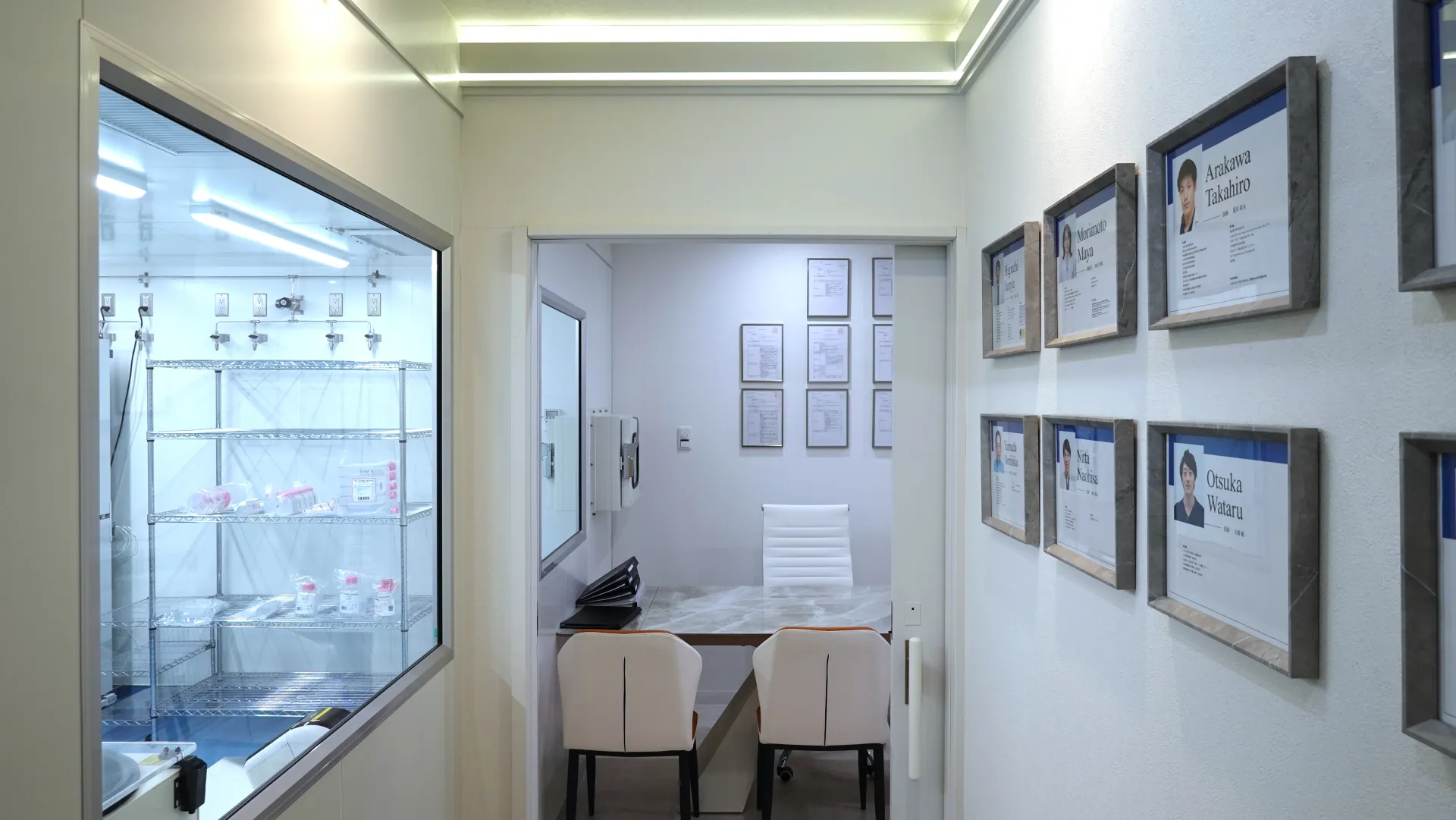
Ginza YR has an in-house cell processing center and has submitted a notification for manufacturing specified cell-processed products (FC3250098). Your fat is collected, cultured, and administered within the same clinic, without sending cells to an external processing company. The doctor can directly oversee the culture process.
Both in-house culturing and external processing can operate in compliance; the key is quality management. During the consultation, you can ask: what tests are done before release (sterility, cell count, viability, etc.)? Can I have the results in writing? If culture results are suboptimal, how is it handled and how are costs calculated?
05
Possible risks and adverse reactions
Possible risks listed on the clinic’s website include pain, swelling, subcutaneous bleeding, and infection at the collection and injection sites, as well as inflammatory reactions, fever, fatigue, allergic-like reactions, and vasovagal reflex; during IV drip, vascular pain, fever, chills, and dyspnea may occasionally occur.
Treatment effects vary by person and cannot be guaranteed. During the consultation, ask the doctor to explain any risks you personally should pay special attention to, as well as what to do and who to contact if discomfort occurs.
06
Questions to ask during the consultation
It’s best to have these questions answered by the physician in charge, and obtain important explanations in writing where possible:
- Which plan suits my situation? In what situations is it not recommended?
- What is the treatment goal, how long will it take, and what metrics will be used to evaluate it?
- How is fat harvested and how long does it take? What should I pay attention to on the day and afterward?
- What tests are done before release? How are suboptimal culture results handled?
- How often should I report my condition after returning home? If I feel unwell, who do I contact?
- Besides stem cells, what other options are there (physical therapy, medication, PRP, surgery)?
07
Common questions
For autologous fat-derived stem cells at Ginza YR, how many trips to Japan are needed?
Usually two: the first for consultation, tests, and fat harvesting, and the second for administration after about 3–4 weeks of culture. You can also stay in Japan for 3–4 weeks. Subject to the clinic’s schedule.
Can fat be harvested on the first visit day?
The first visit is for consultation and assessment; treatment is not done that day. Fat harvesting is scheduled after the doctor determines it can proceed, with the exact date per the clinic’s schedule. We suggest allowing a few extra days on the first trip.
Where are the cells cultured?
They are cultured in the in-house cell processing center at Ginza YR Clinic, which has submitted a notification for manufacturing specified cell-processed products (FC3250098). Cells are not sent outside the clinic.
How many sessions are needed?
The doctor will decide based on your condition and goals. The clinic states that if additional treatment is needed, both local injections and drips are at least 1 month apart, typically once every 6–12 months.
How much does it cost?
This is self-pay care and not covered by Japan’s public health insurance. The clinic provides a written quote after the consultation. Medical fees and this site’s coordination fee are itemized separately.
Read next
Sources
- Ginza YR Clinic official website: autologous fat-derived stem cell treatment (risk and treatment interval information)
- Ginza YR Clinic official website (address, clinic hours, plan numbers)
- MHLW e-Regenerative Medicine: submitted Class II regenerative medicine provision plans
- MHLW: systems and procedures related to the Act on the Safety of Regenerative Medicine