

In this article
Short answer
When choosing a country for stem cells, compare the system, not the ads: is there dedicated regulation for cell therapies, who reviews projects, can institutions and projects be found on official websites, and what remedies exist if adverse events occur. Japan has dedicated law for regenerative medicine, and submitted plans are published on the Ministry of Health, Labour and Welfare (MHLW) website. Thailand, Malaysia, and others also have their own authorities and rules—base comparisons on local official information, not on intermediaries’ claims.
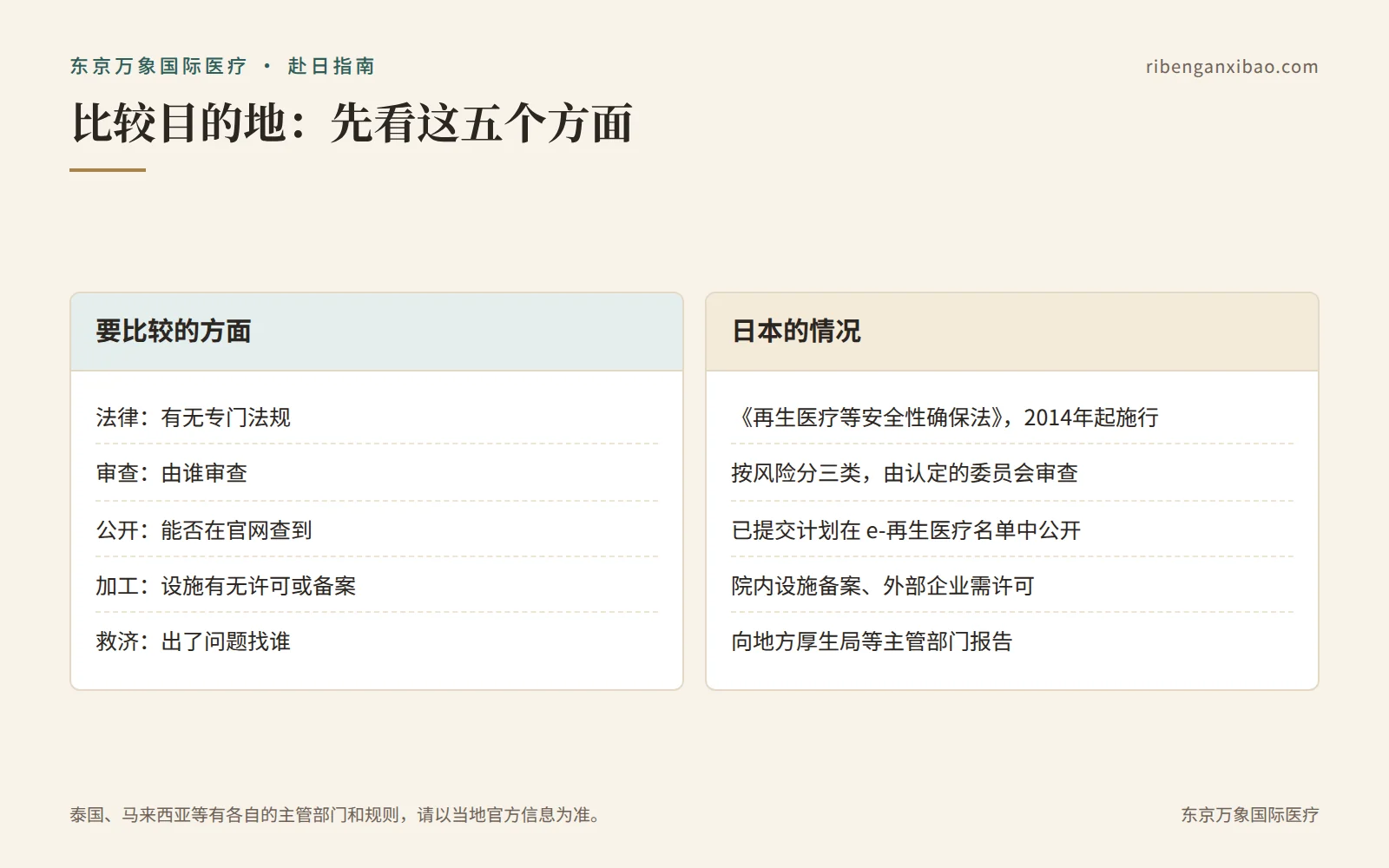
- Dedicated laws
- Japan: the Act on the Safety of Regenerative Medicine, in force since 2014
- Review process
- Japan: three classes by risk, reviewed by certified committees; institutions must report periodically
- Public lookup
- Japan: submitted plans are public in the MHLW e-Regenerative Medicine list
- Cell processing
- Japan: processing facilities must be registered or licensed
- Other regions
- Thailand, Malaysia, and others have their own competent authorities; rules and transparency vary—verify with local official sources
01
Why compare the system first
Japan, Southeast Asia, or elsewhere cannot be simply divided into “high-end” and “low-end.” Within the same country, there are both compliant and non-compliant providers.
The system determines how much you can verify: whether a project has been reviewed, and whether problems are recorded with a path for accountability. The more you can verify, the more solid your basis for decision-making.
02
Five things to look at when comparing
- Law: is there regulation dedicated to cell therapies, or only general medical regulation
- Review: who reviews projects—an independent committee or the institution itself
- Disclosure: can institutions and projects be found on official websites
- Processing: where are cells processed; is the facility licensed or registered
- Remedies: when adverse events occur, which authority is notified and how accountability is pursued
03
How to verify in other regions
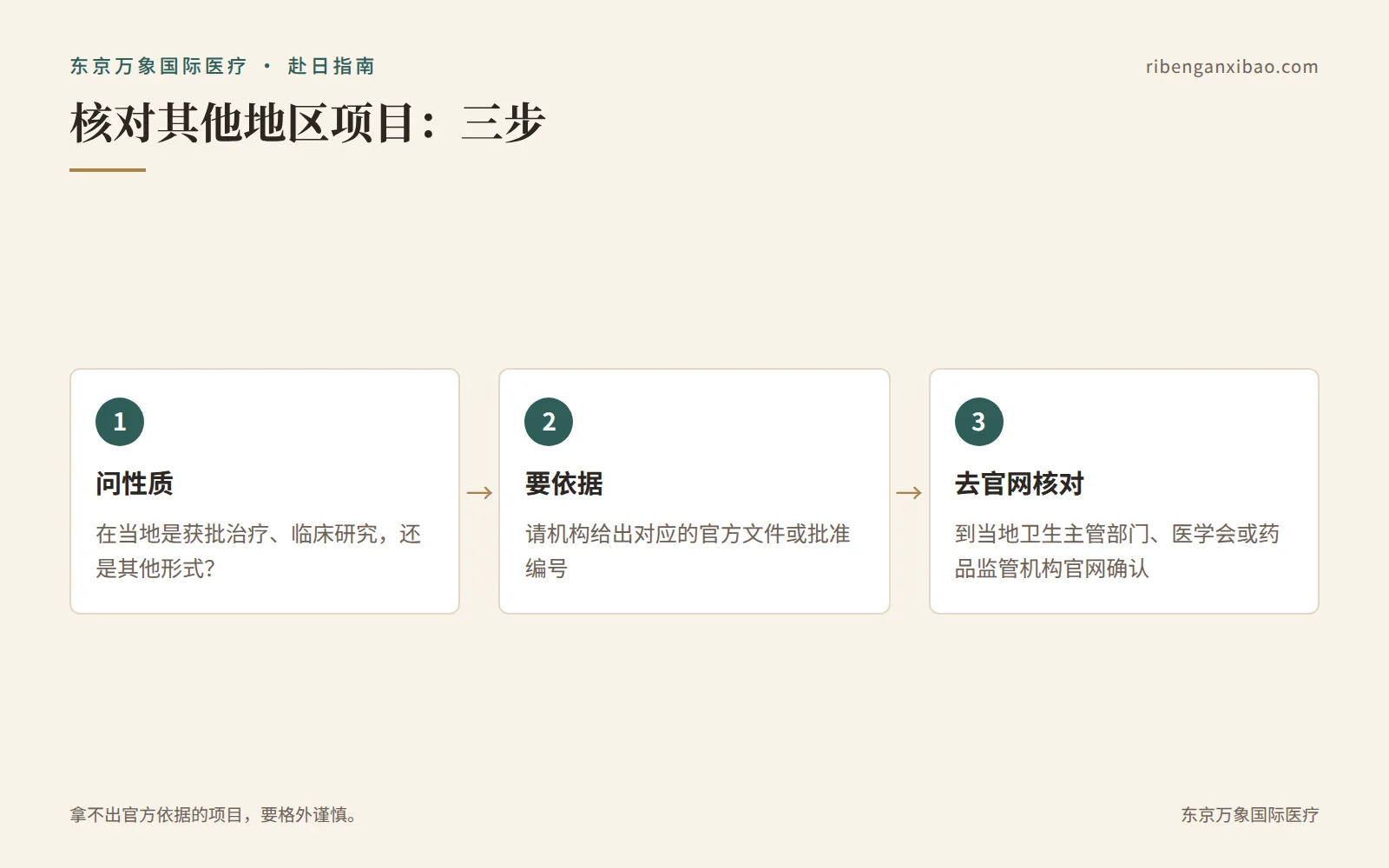
In many countries and regions, unapproved stem cell treatments are only allowed within a clinical research framework, or only for specific diseases. When consulting, ask the provider directly: is this an approved treatment, clinical research, or something else locally? On the basis of which official document?
Then check on the websites of the local health authority, medical societies, or the drug regulator. If no official basis can be provided, be especially cautious.
04
Beyond the system, also compare these
Specialty capability, language communication, post-treatment follow-up, handling of emergencies, total trip time, and cost breakdown are all practical factors. Labels like “high-end” or “chosen by the rich” are not among them.
05
Common questions
Which country is best or cheapest for stem cells?
We don’t do such rankings. Systems, projects, and cost structures vary widely; the starting point should be how much you can verify.
Are stem cell treatments in Thailand and Malaysia legal?
It depends on the specific project and local rules. Have the provider state whether it is an approved treatment or clinical research locally, and verify on the website of the local competent authority.
What safeguards are there in Japan?
Japan has a dedicated law for regenerative medicine; projects must be reviewed by committees, institutions report periodically, and plans are published on the official list. These are procedural safeguards and do not imply efficacy.